



If you’re buying, selling, renting or simply looking to improve the energy efficiency of your home, you may wonder what is an EPC and why does it matter?
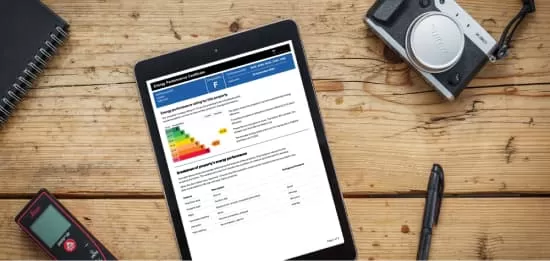
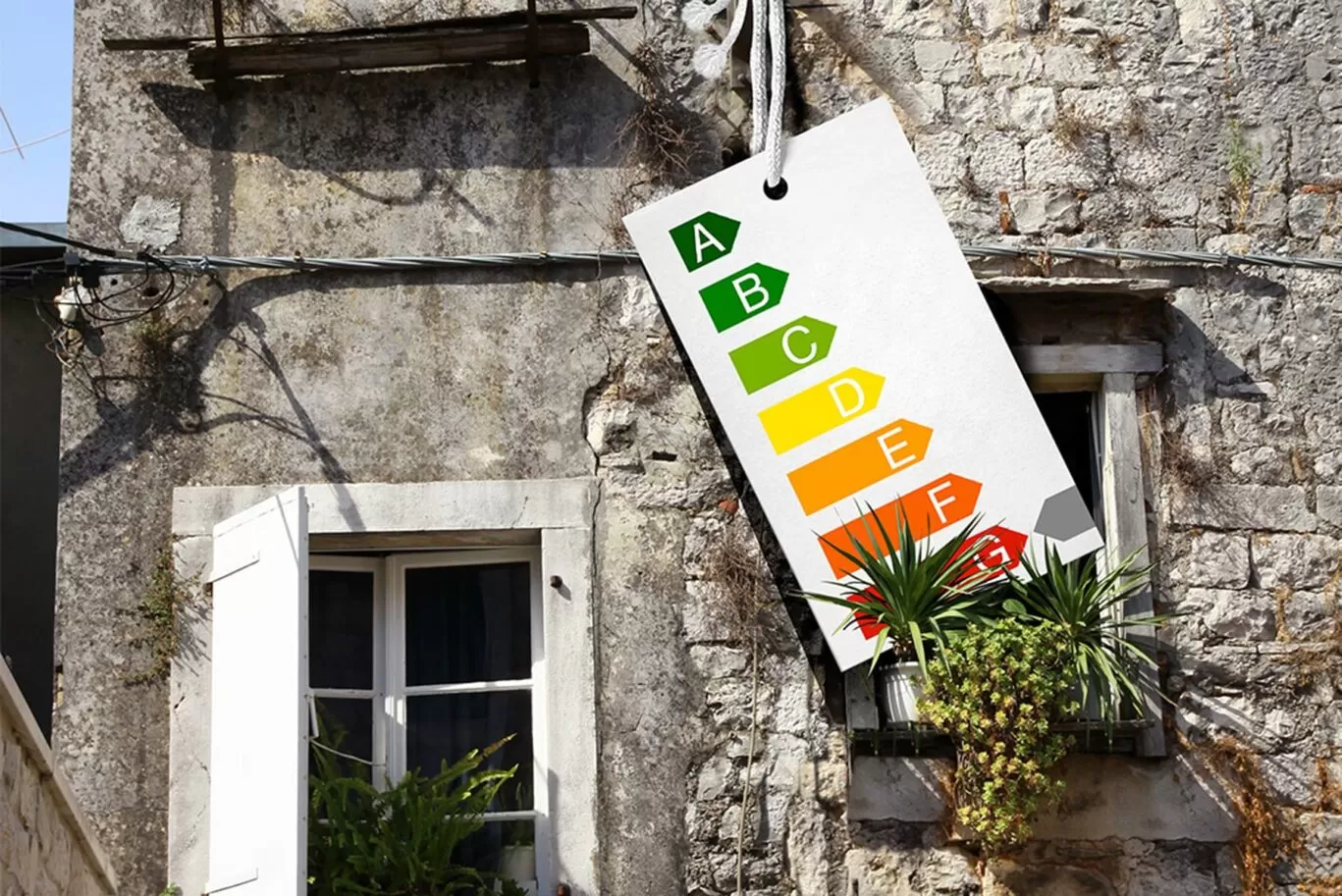
An Energy Performance Certificate (EPC) is a legal document that shows how energy efficient a property is. It gives the building an energy efficiency rating from A (most efficient) to G (least efficient), helping homeowners, buyers, tenants and landlords understand how efficiently a property uses energy and what improvements could be made.
For homeowners, an EPC provides valuable information about running costs, energy performance and potential upgrades. For Domestic Energy Assessors (DEAs), understanding how to explain an EPC clearly helps clients appreciate its value beyond simply meeting a legal requirement.
What Is An Energy Performance Certificate (EPC)?
An Energy Performance Certificate (EPC) assesses the energy efficiency of a property using standard occupancy assumptions rather than the lifestyle of the people currently living there. This ensures properties can be compared fairly, regardless of individual energy usage.
An EPC takes into account the building fabric, including walls, roof, floors, windows and doors and its services, including heating, lighting and hot water systems. It provides an overall energy efficiency rating alongside an environmental impact assessment.
In addition to the overall rating, an EPC includes:
- The property’s current energy efficiency rating.
- Its potential rating after recommended improvements are completed.
- Typical energy use and estimated running costs.
- Estimated carbon dioxide (CO₂) emissions.
- Recommendations for improving energy efficiency.
- Potential savings that could be achieved by making those improvements.
Every EPC remains valid for 10 years, although a new certificate can be obtained sooner. For instance, if improvements have been made to a home, the owner may request a new certificate to reflect the property’s updated performance.
For Domestic Energy Assessors, it’s helpful to explain that an EPC is not simply a pass or fail document. Instead, it provides a snapshot of the property’s energy performance together with practical recommendations that can improve comfort, reduce energy use and potentially lower household bills.
When Do I Need An EPC?
One of the most common questions after what is an EPC is when one is actually required.
In the UK, an EPC is legally required whenever a property is:
- Marketed for Sale
- Marketed for Let
- Newly built (on construction)
The seller or landlord must have commissioned an EPC before marketing begins and make it available to prospective buyers or tenants at the earliest opportunity.
Homeowners may also choose to obtain a new EPC after carrying out energy efficiency improvements, allowing the updated certificate to reflect any improvements to the property’s rating.
Besides fulfilling legal requirements, EPCs help:
- Buyers compare the energy efficiency of different homes
- Tenants understand likely energy costs
- Homeowners identify opportunities to improve efficiency
- Property owners reduce energy consumption and carbon emissions
Certain buildings are exempt from EPC requirements, including some protected buildings where improvements would unacceptably alter their character, temporary buildings, some small standalone buildings, places of worship and certain holiday accommodation.
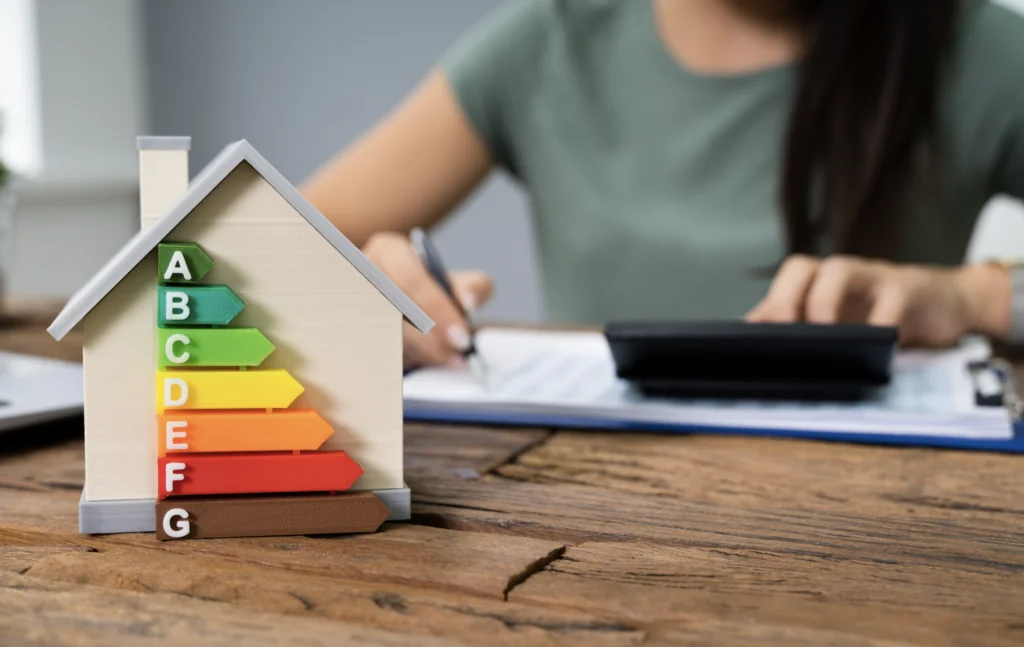
How To Understand An EPC
Although an EPC contains a lot of technical information, it is designed to present the most important details clearly.
For homeowners, the certificate provides an easy-to-read overview of how efficiently the property performs and where improvements can be made.
For Domestic Energy Assessors, explaining each section in simple language helps clients understand that the certificate is intended to inform, not confuse. Walking through the current rating, potential rating and recommended improvements often gives clients the confidence to take the next steps towards future energy upgrades by getting in touch with a Retrofit Assessor.
It’s also important to explain that the EPC is based on standard assumptions about occupancy, meaning actual energy bills may differ depending on how occupants use the property.
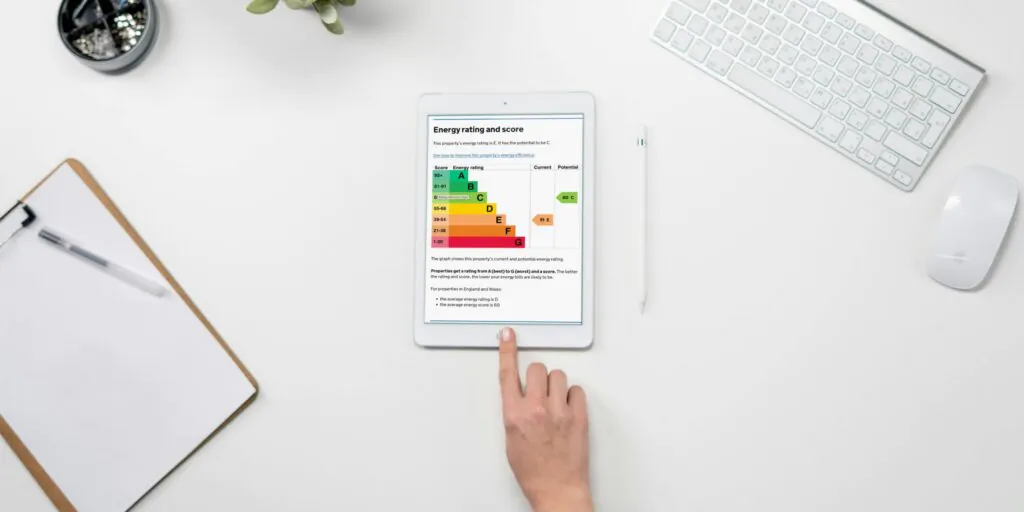
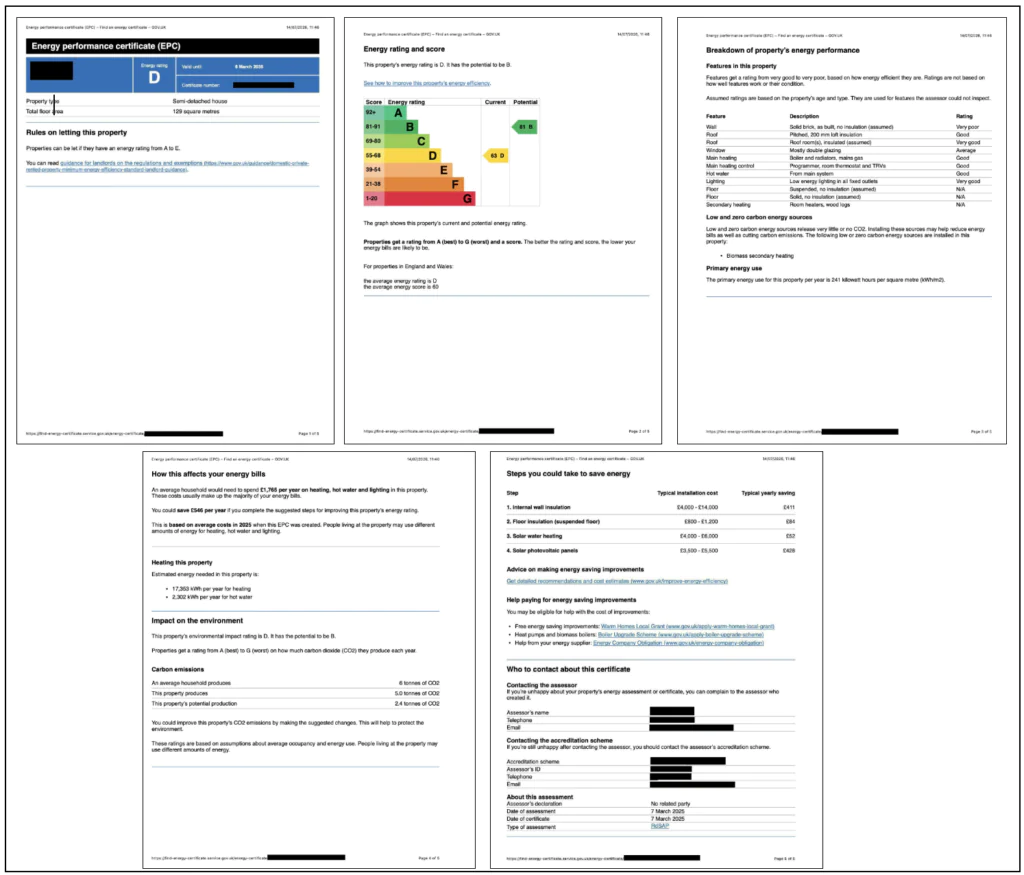
The Anatomy Of An EPC
While EPCs across the UK all contain broadly the same core information, the presentation differs between UK nations, and Scotland is introducing a revised EPC format in the coming years.
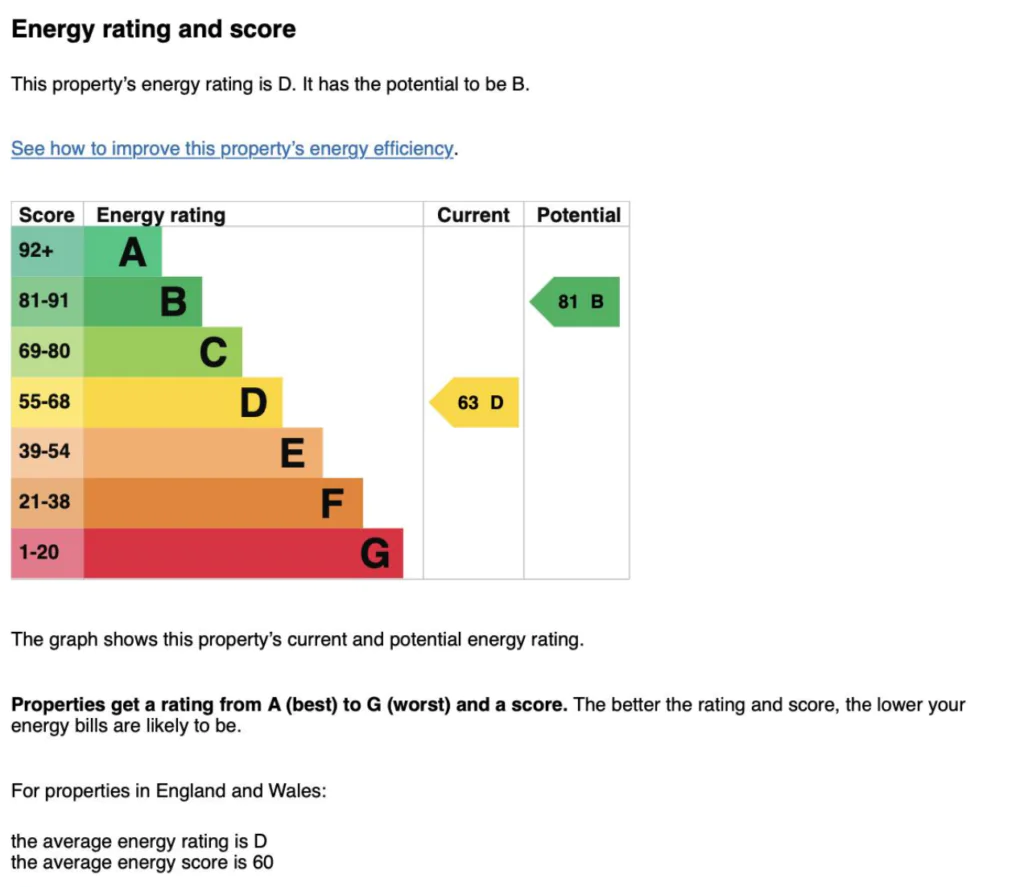
The most recognisable part of an EPC is the coloured A to G rating scale.
This shows the property’s current energy efficiency alongside its potential rating if all recommended improvements were completed. An A-rated property is the most energy efficient, while a G-rated property is the least.
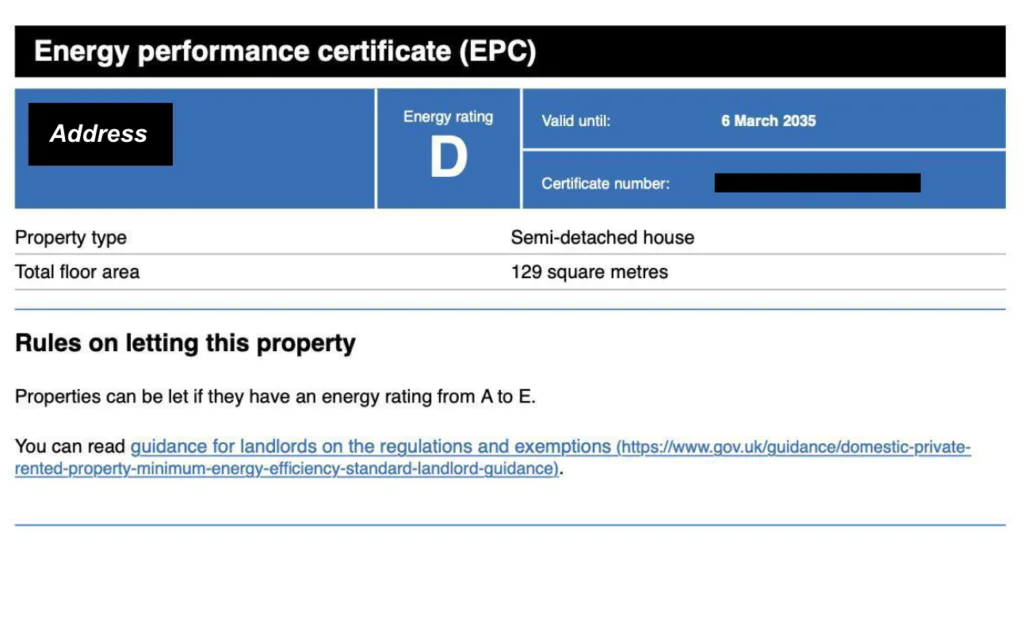
Every EPC contains basic details about the property, including its address, property type and floor area.
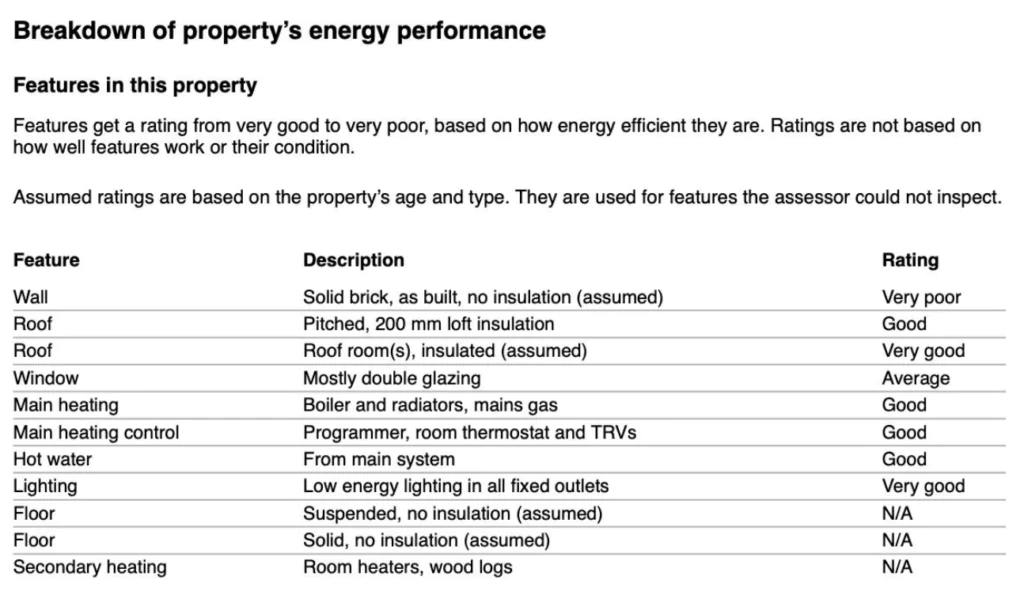
The certificate provides a breakdown of the energy performance of key building elements, including features such as:
- Walls
- Roof
- Floors
- Windows
- Heating system
- Hot water
- Lighting
- Renewables
This helps explain which parts of the property perform well and which may benefit from improvement.
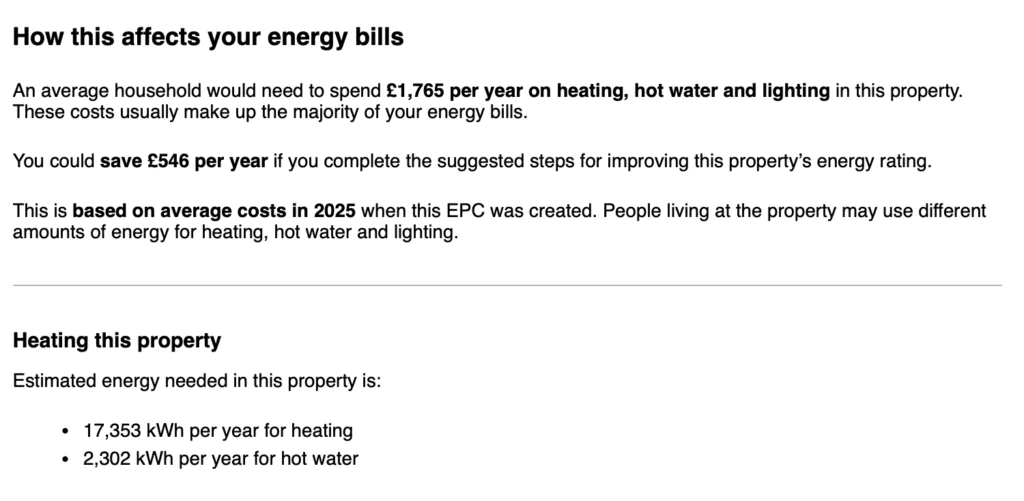
An EPC estimates the property’s typical energy use and running costs based on standard occupancy assumptions.
These estimates help homeowners understand the likely cost of heating and powering the property. However, it must be noted that these are estimates based on standard occupancy and actual bills may differ.
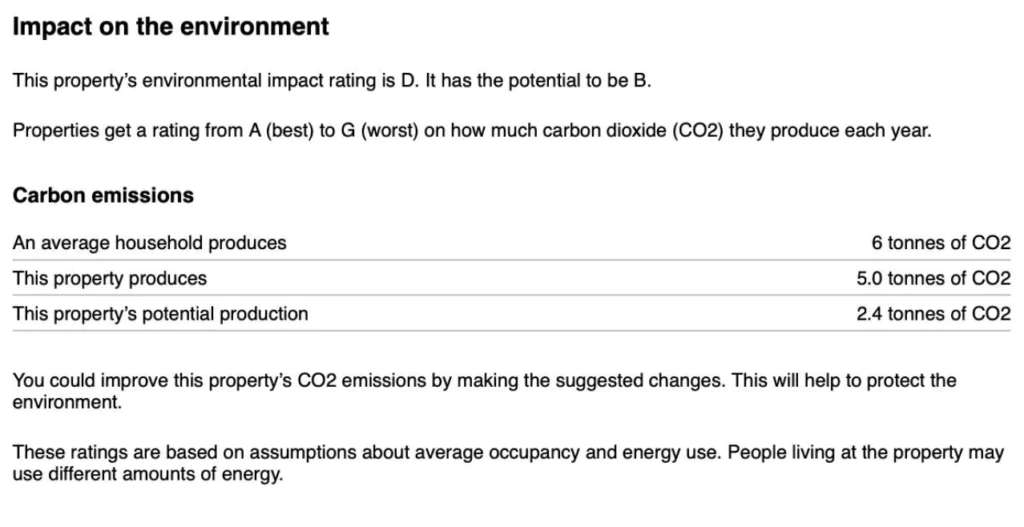
The certificate also includes information about the property’s likely carbon dioxide emissions, giving an indication of its environmental performance.
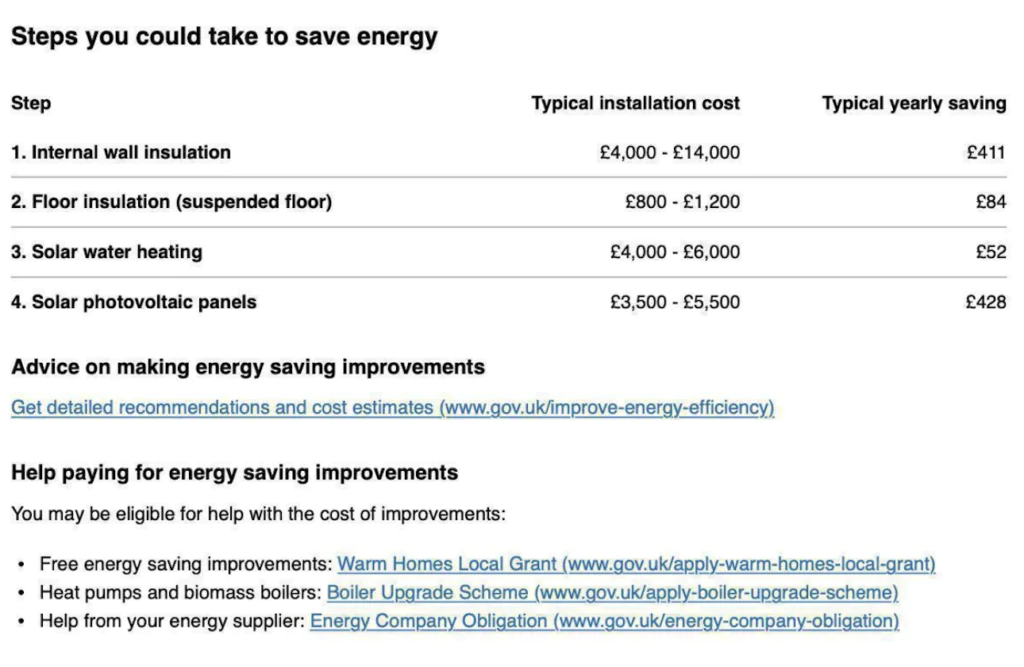
One of the most valuable sections of an EPC is the recommendations (“steps you can take to save energy”) page.
This outlines practical improvements that could increase the property’s energy efficiency rating while potentially reducing energy consumption, running costs and carbon emissions.
Examples may include upgrading insulation, improving heating systems or switching to more energy-efficient lighting.
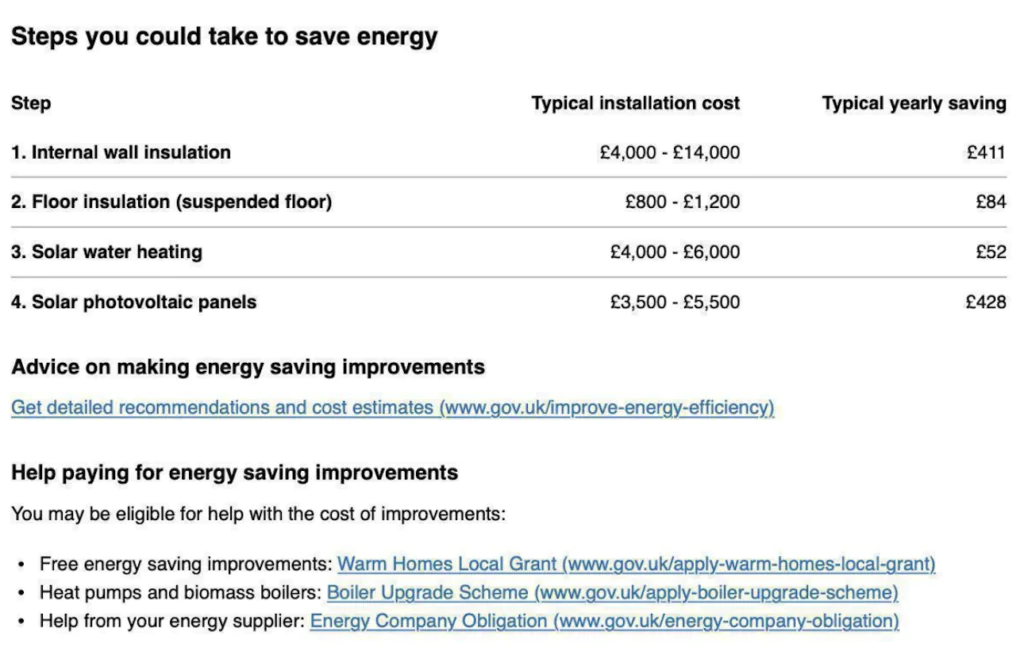
Alongside the recommendations, the EPC provides indicative estimates of the savings that could result from implementing the recommended improvements. These figures are modelled estimates and actual savings will depend on the property and how it is occupied.
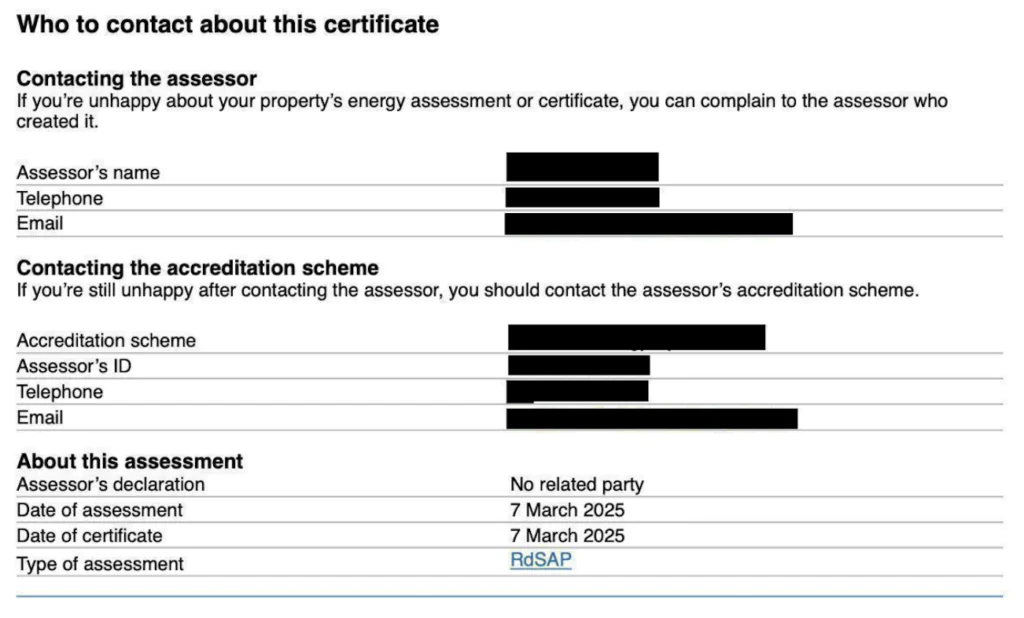
Towards the end of the certificate, you’ll find the details of the accredited Domestic Energy Assessor who carried out the assessment, including their contact information and Accreditation Scheme. If a homeowner has questions about the certificate, the assessor should be their first point of contact.
Where Can I Find An EPC
If you’re wondering whether a property already has an EPC, you can search the official EPC registers.
For dwellings in England, Wales and Northern Ireland, use the GOV.UK Find an Energy Certificate service.
For dwellings in Scotland, use the Scottish EPC Register.
If the property cannot be found on the register or the certificate has expired, a new EPC can be produced by an accredited Domestic Energy Assessor.
Become An EPC Assessor
If learning what is an EPC has inspired you to build a career in energy assessment, becoming a Domestic Energy Assessor (DEA) could be the perfect next step.
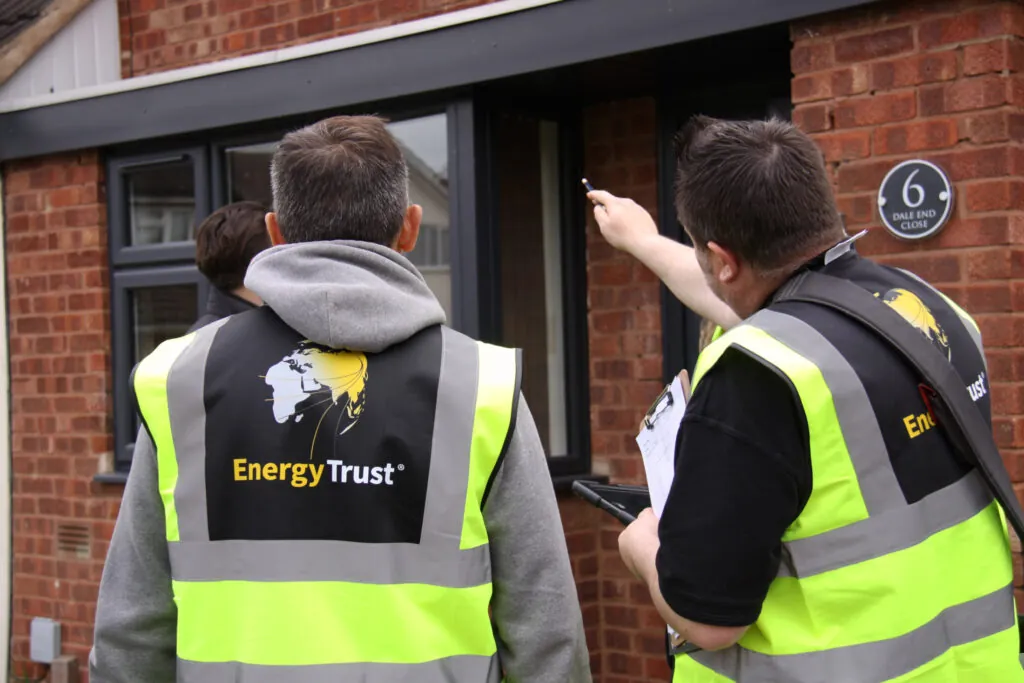
As a DEA, you’ll visit properties, carry out energy assessments, produce EPCs and help homeowners understand how they can improve their property’s energy performance.
Energy Trust offers flexible training designed to help you qualify as a Domestic Energy Assessor. Whether you’re looking for a domestic energy assessor course online or a classroom domestic energy assessor course, you’ll find training that prepares you with the knowledge and practical skills needed to begin your career in the industry.
With growing demand for qualified assessors across the UK, becoming a DEA offers the opportunity to support homeowners while contributing to improved energy efficiency across the housing sector.