


Domestic Energy Assessor Course (DEA) | ABBE Level 3 Certificate Browse our range of courses available to become a Domestic Energy Assessor
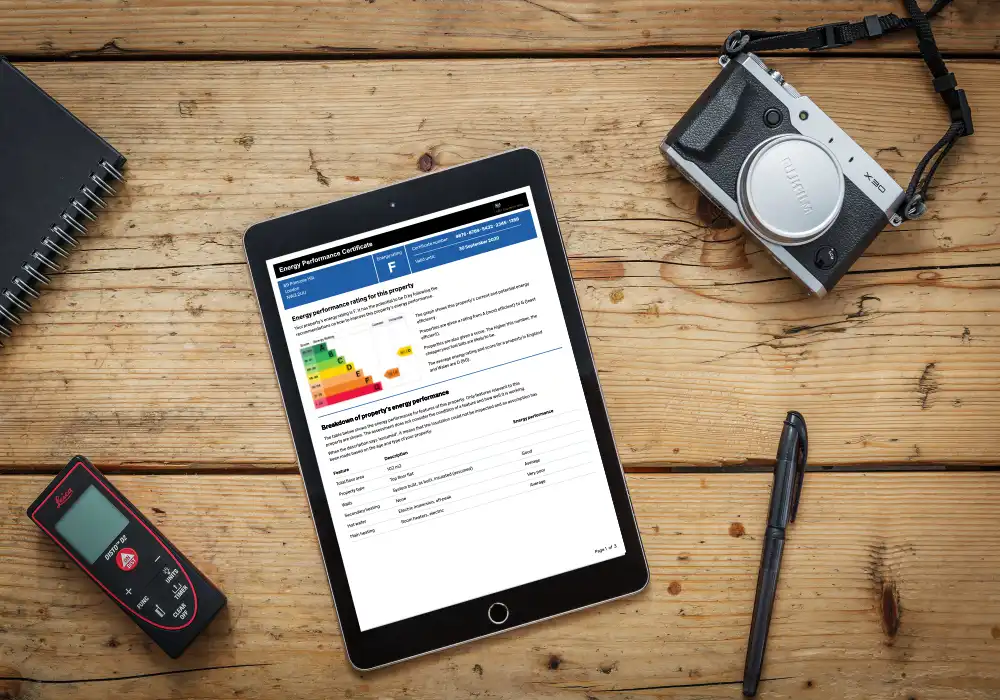
Energy Trust’s domestic energy assessor course offers a route to the ABBE Level 3 Certificate in Domestic Energy Assessment. Once you’ve completed your assessed portfolio and joined an accreditation scheme, you can produce Energy Performance Certificates (EPCs) for existing homes.
Choose three days of live online training, followed by portfolio work, for £990 + VAT. Or complete your portfolio during our five-day classroom course for £1,590 + VAT.



What does a Domestic Energy Assessor do?
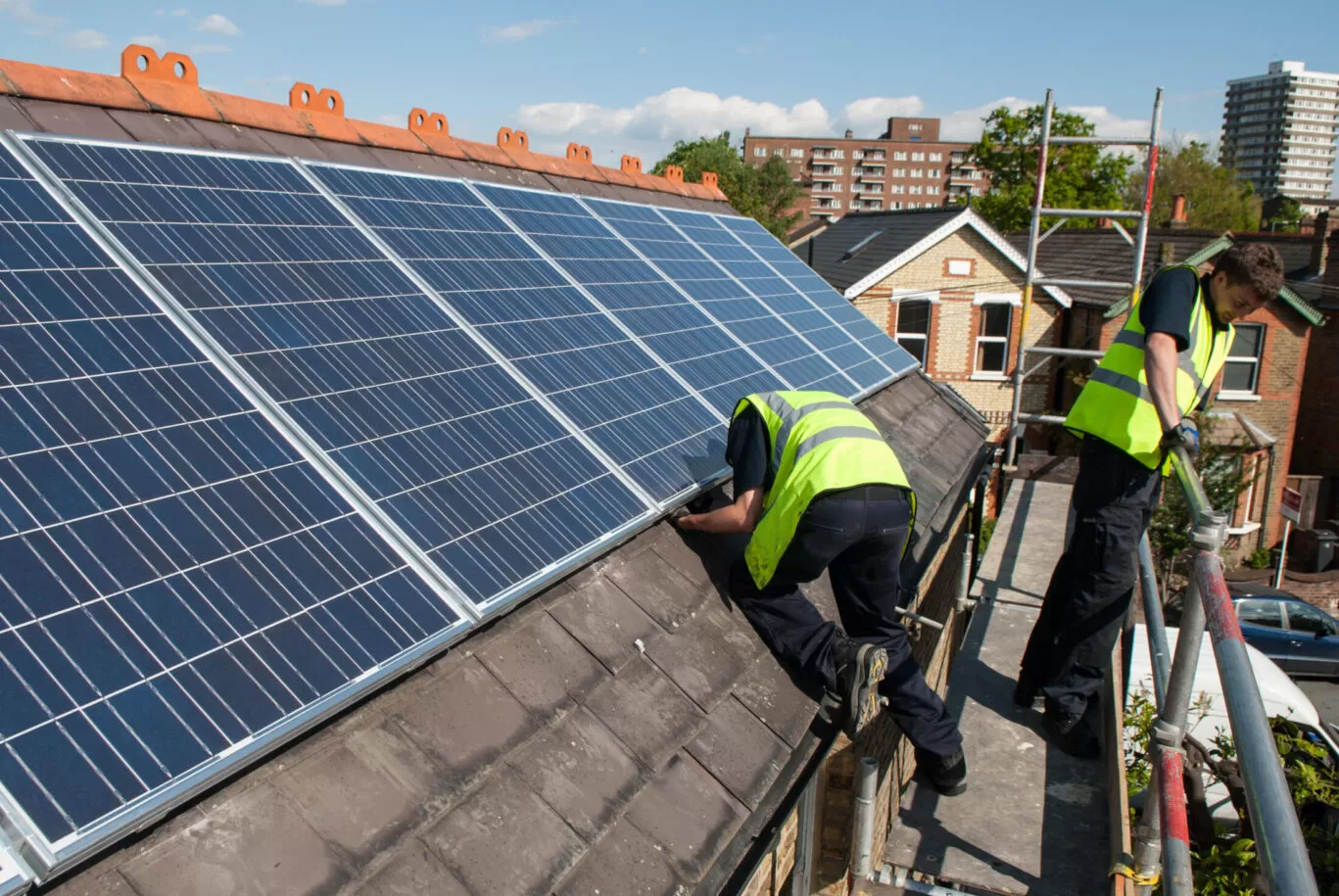
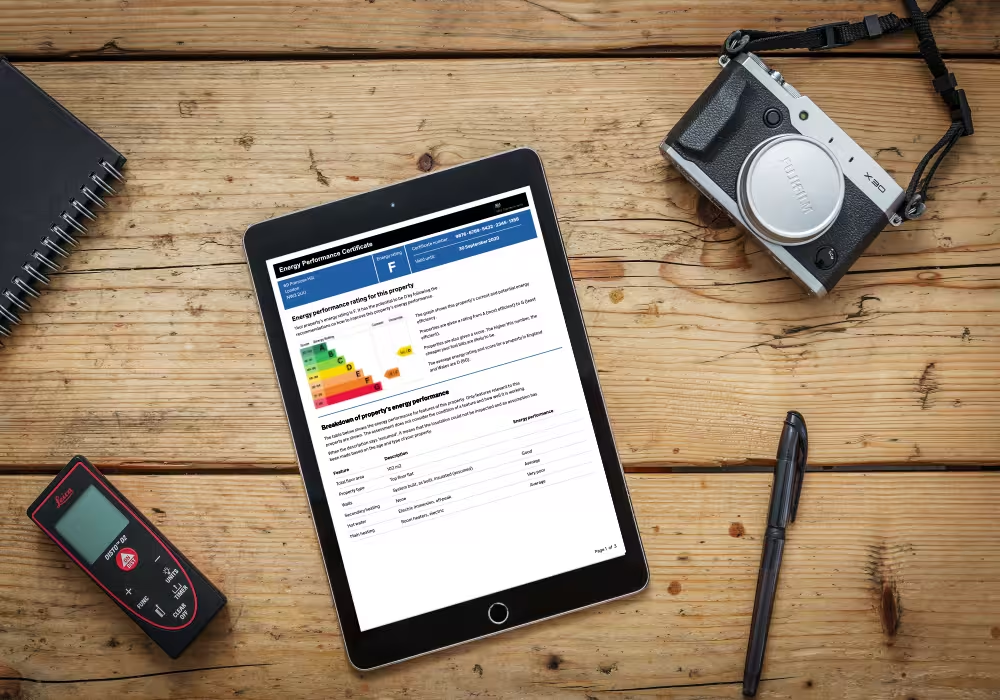
A Domestic Energy Assessor (DEA) surveys existing homes and uses Reduced Data Standard Assessment Procedure (RdSAP) software to produce an Energy Performance Certificate (EPC). A typical day for a Domestic Energy Assessor involves visiting existing homes and checking insulation, heating, windows and other key features. They take notes and photos, then enter their findings into approved software to produce an EPC. This EPC is then lodged through an accreditation scheme.
What is an Energy Performance Certificate (EPC)?
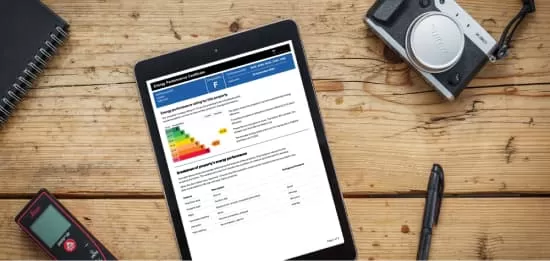
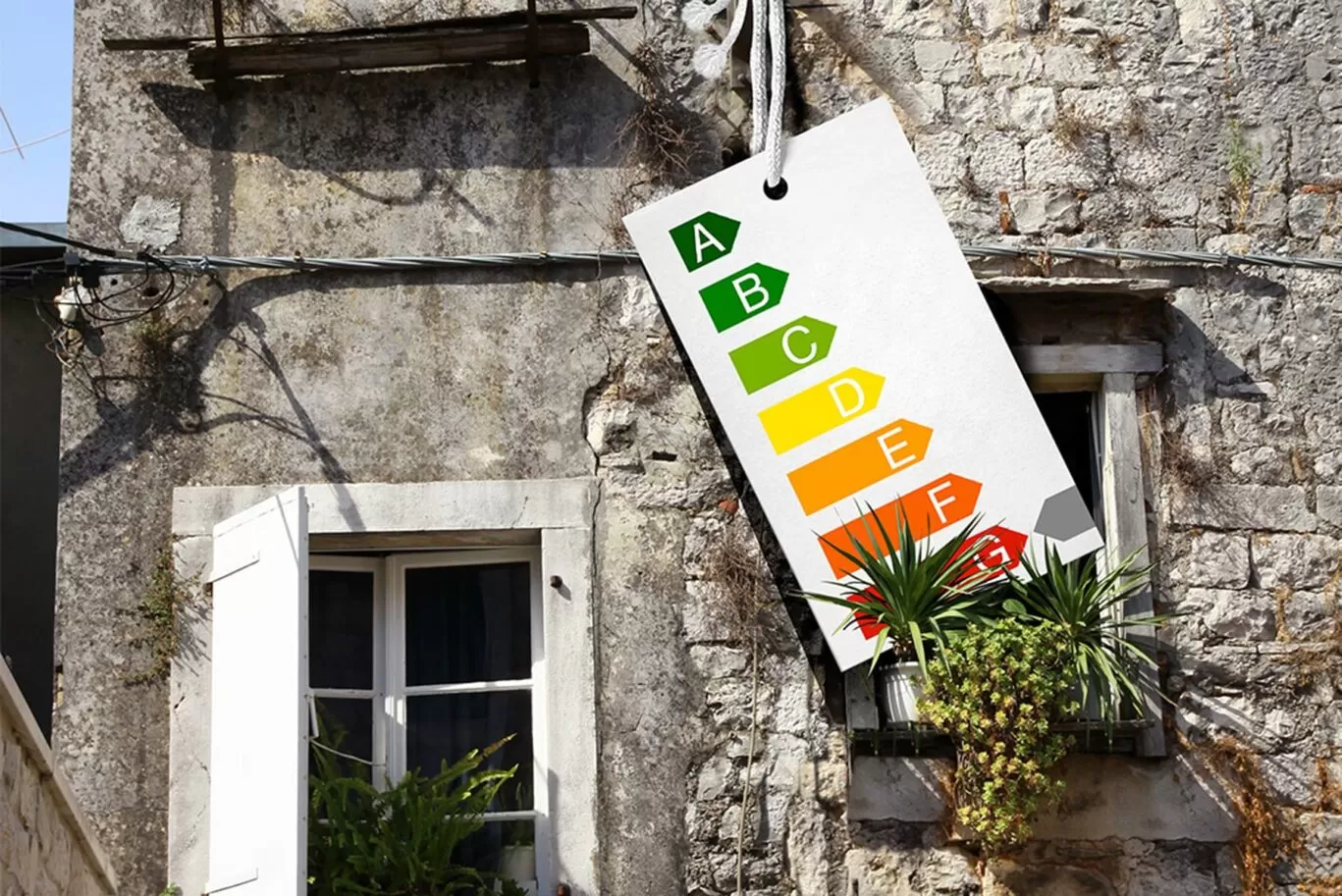
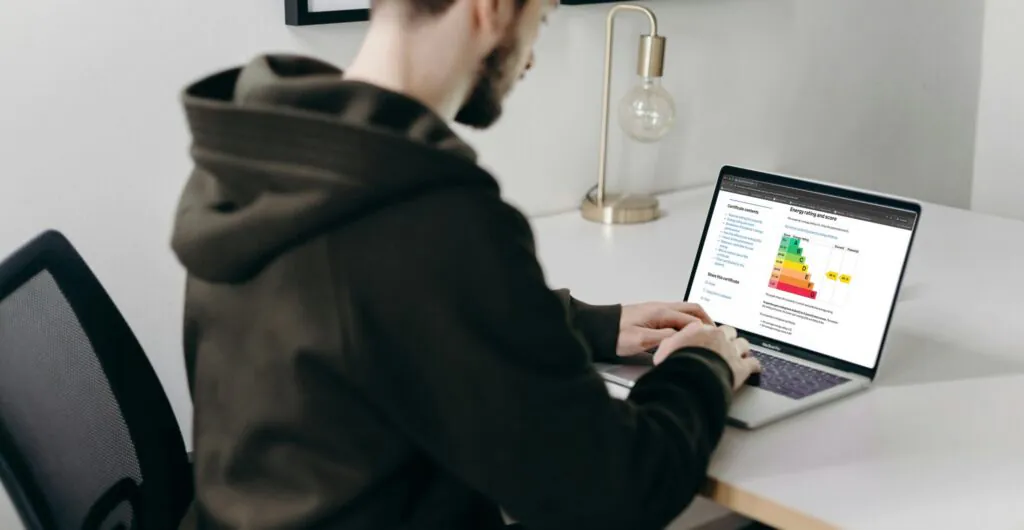
An Energy Performance Certificate (EPC) is a legal document that gives a building an energy efficiency rating from A (most efficient) to G (least efficient), helping homeowners, buyers, tenants and landlords understand how efficiently a property uses energy and what improvements could be made. In the UK, an EPC is legally required whenever a property is:
- Marketed for sale
- Marketed for let
- Newly built (on construction)
Private landlords require EPCs to demonstrate that buildings meet the Minimum Energy Efficiency Standards (MEES), which are currently set at a minimum E rating. EPC calculations are also required for some Government funded retrofit schemes.
Who is the course for?
Our EPC courses are designed for anyone looking to add Domestic Energy Assessment to their professional portfolio. This includes individuals who are completely new to the energy assessment industry, construction experts looking to branch out, and property professionals who want to add domestic EPC assessments to their services.
What are the entry requirements?
Becoming an EPC assessor does not require any prior energy assessment experience or formal qualification prerequisites. However, you must be 18 or over, possess strong IT skills and be comfortable gathering photographs and documents, as well as completing assessed coursework. These skills are crucial for both training and the role itself.
What will I learn?
Throughout the course you will cover all the key skills involved in domestic energy assessment. You will learn how to:
- prepare for a site visit
- inspect an existing home and record its construction, insulation, heating, windows and measurements
- apply the current RdSAP conventions
- use approved software to calculate an EPC
- keep clear evidence
- explain the certificate and improvement recommendations to a client
You will practise all of these skills with example properties throughout your DEA course and whilst completing the assessed portfolio. All of our tutors have years of real-world experience working as DEAs, so they will also teach you the tricks of the trade, and the best practices for working as a DEA.
What do I do once qualified?
After passing the ABBE Level 3 Certificate, you will need to join a government-approved Domestic Energy Assessor accreditation scheme before producing official EPCs for existing homes. Schemes provide lodgement software, technical guidance and quality checks. Once you have done so, you’ll be ready to start lodging EPCs.
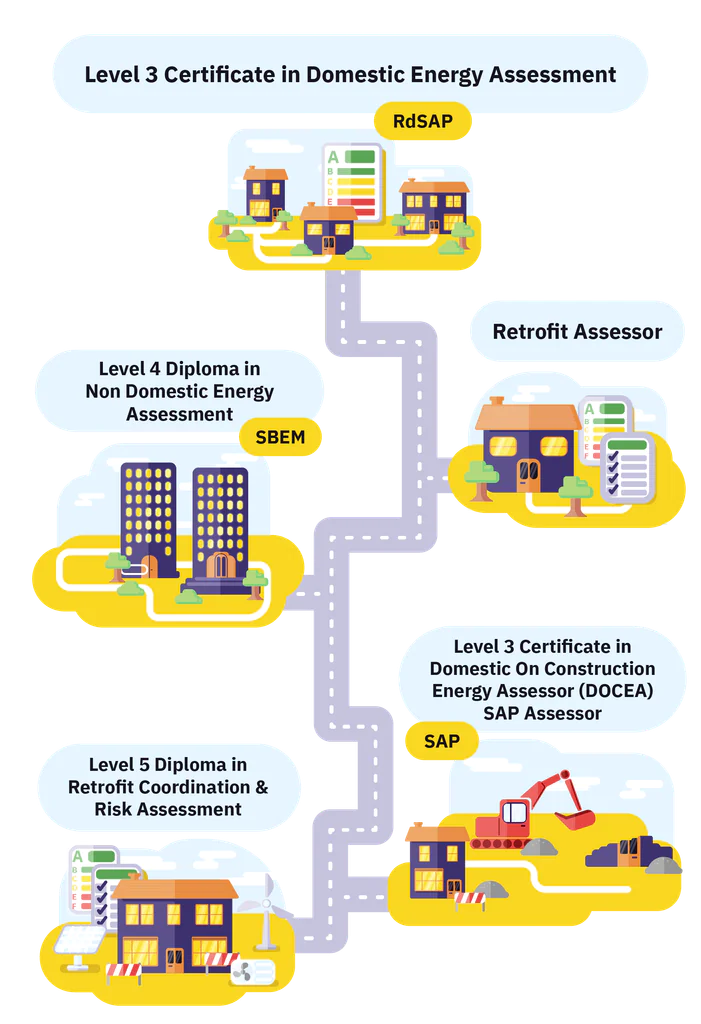
What opportunities does this qualification lead to?
The skills involved in Domestic Energy Assessment form a fantastic foundation for several other roles in the energy assessment and retrofit space. Many individuals use this vital knowledge as a springboard into other qualifications. With further training, DEAs could progress into:
- Retrofit Assessment
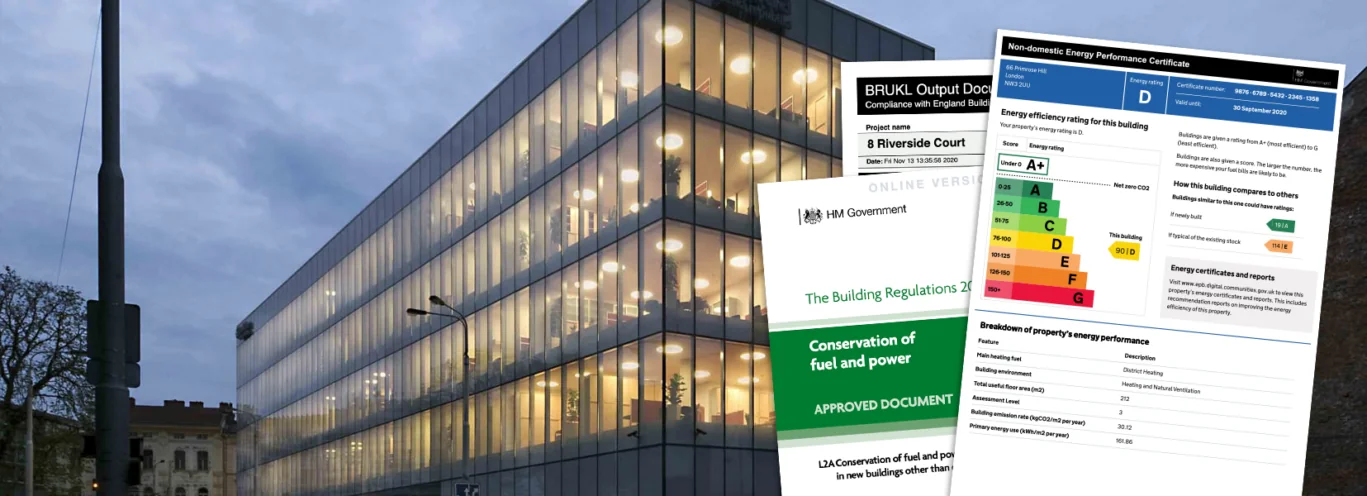
- Non-Domestic Energy Assessment
- On-Construction Domestic Energy Assessment (SAP Assessment)
- Retrofit Coordination & Risk Assessment
Each specialist role has its own qualification and accreditation requirements, building on the key skills DEAs already have.
Domestic Energy Assessor Course FAQs
A DEA surveys existing domestic dwellings, records features such as insulation, heating and windows, and uses RdSAP software to produce an Energy Performance Certificate. An EPC gives an energy rating and suggests improvements. EPCs are lodged through an approved accreditation scheme.
To become a Domestic Energy Assessor (DEA) you’ll need to gain a recognised qualification like the ABBE Level 3 Certificate in Domestic Energy Assessment. This can be achieved by completing one of Energy Trust’s DEA courses. Once qualified, you’ll then need to join an approved accreditation scheme to officially lodge EPCs as a DEA.
You don’t need any specific prior qualifications to become a Domestic Energy Assessor. However, it is necessary that you have strong IT skills in order to undertake DEA training as it will involve opening and editing Word documents, creating zip files, organising documents, navigating websites and transferring photos.
The time it takes to become qualified will depend on the format of course you choose, and your pace. With Energy Trust’s DEA Classroom Course, you could complete all the work within as little as 5 days. If you choose the 3-Day Live Online format, the portfolio takes students between 4-6 weeks on average. Students have a maximum of 12 months to complete the course. Your calendar time depends on your pace.
The cost depends on the course format you choose. The 3-Day Live Online DEA Course costs £990 + VAT and the DEA Classroom Course is available for £1,590 + VAT. Both prices include ABBE registration, materials, portfolio support and the certificate.
After qualifying, you may pay separate accreditation, insurance and EPC lodgement fees.
The National Careers Service lists indicative employed salaries of £24,000 for starters to £35,000 for experienced DEAs. Self-employed earnings vary with the number of assessments, local fees, travel and business costs. These figures are a guide, not a guaranteed outcome.
An EPC (or DEA) course offers a quick and relatively affordable path to a flexible independent career in energy efficiency. It’s a low barrier to entry and equips you with a solid skill set that can develop into various other energy assessment or retrofit roles.
The role requires careful on-site measurements, accurate records, confident use of software and clear communication with clients. Training gives you a structured method, while your accreditation scheme provides technical guidance and quality checks once you are working.
Yes. Energy Trust’s full ABBE Level 3 DEA course has a 3-day live online option taught on Zoom. It includes interactive case studies and virtual property tours, followed by remotely completed portfolio work.
Yes. The ABBE certificate demonstrates your qualification, but you must also join a government-approved Domestic Energy Assessor accreditation scheme before lodging official EPCs. Compare scheme membership, insurance, software, technical support, quality checks and lodgement fees before joining.
Yes, on the DEA Classroom Course students visit real local domestic dwellings for site visits. This hands-on experience allows them to physically carry out a domestic energy assessment and gain practical skills under their tutor’s guidance.
No. The ABBE Level 3 Certificate in Domestic Energy Assessment prepares you to assess existing homes. A newly constructed home needs an accredited on-construction domestic energy assessor using the separate SAP route. Energy Trust offers a different course for that role.
The actual site inspection can take a DEA anywhere from 30 to 90 minutes on average. The exact time depends on the size and complexity of the property as well as the assessor’s experience.
No. Introduction to Domestic Energy Assessment (IDEA) is a separate short course that takes about four hours and gives a foundation in EPCs and the DEA role. It does not award the Level 3 Certificate or allow you to issue EPCs. If you later book the full DEA qualification with us, the £95 + VAT IDEA fee is taken off the price.
Once your portfolio is assessed as meeting ABBE’s requirements, you receive the Level 3 Certificate in Domestic Energy Assessment. To begin issuing official EPCs, you must then join an approved DEA accreditation scheme and meet its requirements. The scheme provides the route to lodge certificates on the official register.
You attend five consecutive days at Energy Trust’s Leicestershire training centre. The course includes practical work on five example EPC projects based on real buildings, using RdSAP software. Much of the assessed portfolio is completed during the course, with any remaining assignments finished remotely.
The Zoom course includes three live tutor-led days, interactive EPC case studies, two virtual property tours, electronic materials, RdSAP trainee software, ABBE registration, access to the learning system and personal tutor support while you complete the portfolio remotely. Energy Trust states that coursework attempts are available within a 12-month period.
Meet Our DEA Tutors
Meet our DEA tutors. Every one of our trainers has years of practical experience in the qualification they teach. This gives them expert insight into not only the theory, but how that theory applies in real-world scenarios. They are eager to share that expertise with each and every class they teach.

Richard has been carrying out domestic energy assessments since 2007 and has several years of teaching experience in this field.

Charlotte has years of experience in domestic energy assessment, even working as an auditor of EPCs on behalf of a recognised accreditation scheme for a number of years.

Phil runs his own EPC business and has been producing EPCs for domestic dwellings for over a decade.

Dominic has a wealth of experience in domestic energy and retrofit assessment and holds an MSc in Building Surveying.
Your tutor will depend on the course date you choose.



Why choose Energy Trust?
Energy Trust has been training energy assessors since 2008. Our DEA course combines live teaching from practising specialists, hands-on EPC examples, and constant support while you complete your portfolio.
Over the years, we’ve helped thousands of people achieve their professional goals. We remain committed to providing exceptional training, equipping our students with the skills and confidence they need to thrive in their new roles.
One of the most direct ways we support our students is through our helpline. Our email inbox is constantly monitored by a team of qualified assessors, experts and tutors who provide clear, accurate and informative support for any queries our learners may have. For out-of-hours questions, we also have a dedicated support site which is full of helpful articles addressing specific student needs.
Ultimately, our top priority is ensuring our learners feel supported and confident as they complete their studies and transition into their new roles.
Compare the formats and upcoming dates, or speak to a course adviser about the right route for you.