



The Home Energy Model (HEM) is designed to provide a more detailed assessment of a home’s energy performance than SAP (Standard Assessment Procedure). One important part of this is how the model accounts for the conditions outside the building.
External conditions have a direct impact on heat loss, heat gains, ventilation performance, renewable energy generation and heating system efficiency. To model these effects accurately, the Home Energy Model uses detailed weather data that describes the environment surrounding the dwelling.
For energy assessors, understanding how the Home Energy Model external methodology works helps explain why location-specific weather data plays such an important role in the calculations.
Weather Files in the Home Energy Model External Methodology
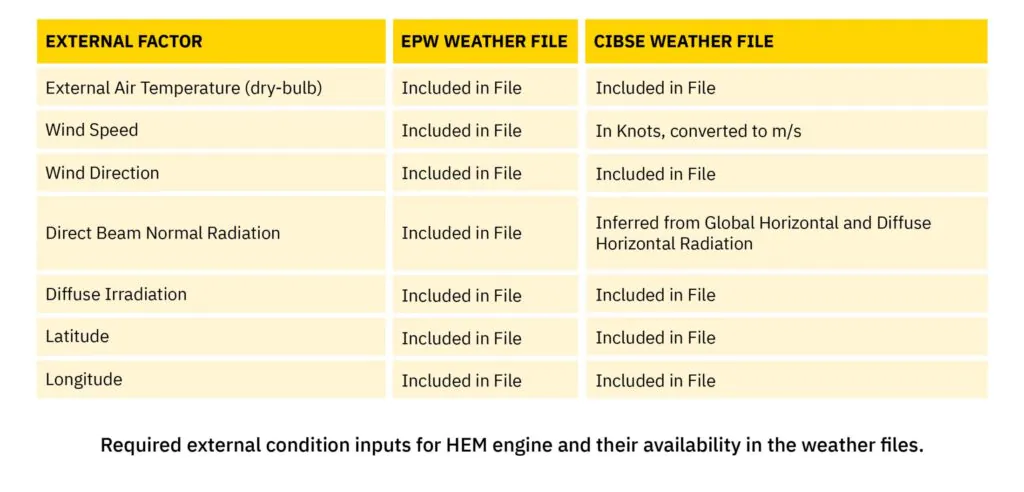
The Home Energy Model requires information about several external factors, including:
- External air temperature
- Solar radiation
- Wind speed
- Wind direction
- Latitude
- Longitude
In most cases, this information is loaded from a weather file selected by the user, although it can also be entered directly into the model.
HEM has been developed to accept two types of weather files:
- EnergyPlus Weather Format (EPW) files
- CIBSE Test Reference Year (TRY) files
EnergyPlus Weather Format (EPW) files were chosen because they are freely available for a wide range of locations and contain the detailed data needed to support HEM’s building physics calculations. CIBSE Test Reference Year (TRY) files are also supported because they can provide future climate scenarios based on Met Office climate projections.
This allows the Home Energy Model to use both standard weather datasets and future climate scenario data available through CIBSE TRY files.
How External Temperature Is Used
Hourly external air temperature is taken directly from the weather file and is used throughout the Home Energy Model.
The external temperature acts as:
- The boundary condition for heat loss calculations through building fabric
- The source temperature for air source heat pumps
- The supply temperature for air entering through infiltration and ventilation
- An input for weather-compensated heating controls
- A factor in calculating ductwork losses for mechanical ventilation systems
In practice, this means external temperature influences both the energy demand of the building and the performance of many of the systems within it.
Wind Speed and Wind Direction
The Home Energy Model also uses hourly wind speed and wind direction data from the weather files.
For EPW files, wind speed is provided directly. For CIBSE weather files, wind speed is supplied in knots and converted automatically into metres per second for use within the model.
Wind data is primarily used within the infiltration and ventilation calculations. The model uses wind speed and direction to determine wind pressure across airflow paths, helping to estimate how air moves through the dwelling.
For assessors, this highlights how local wind conditions influence the infiltration and ventilation calculations within HEM.

Solar Radiation and Heat Gains
Solar radiation is another key external factor within HEM.
The model uses two forms of solar radiation:
- Diffuse horizontal irradiation
- Direct beam normal radiation
Where EPW files are used, both values are available directly. When using CIBSE weather files, direct beam normal radiation is derived from the difference between global horizontal and diffuse horizontal radiation and adjusted using the solar altitude for each timestep.
The Home Energy Model uses solar radiation to calculate:
- Solar gains through windows and other transparent elements
- Solar absorption by external opaque building elements
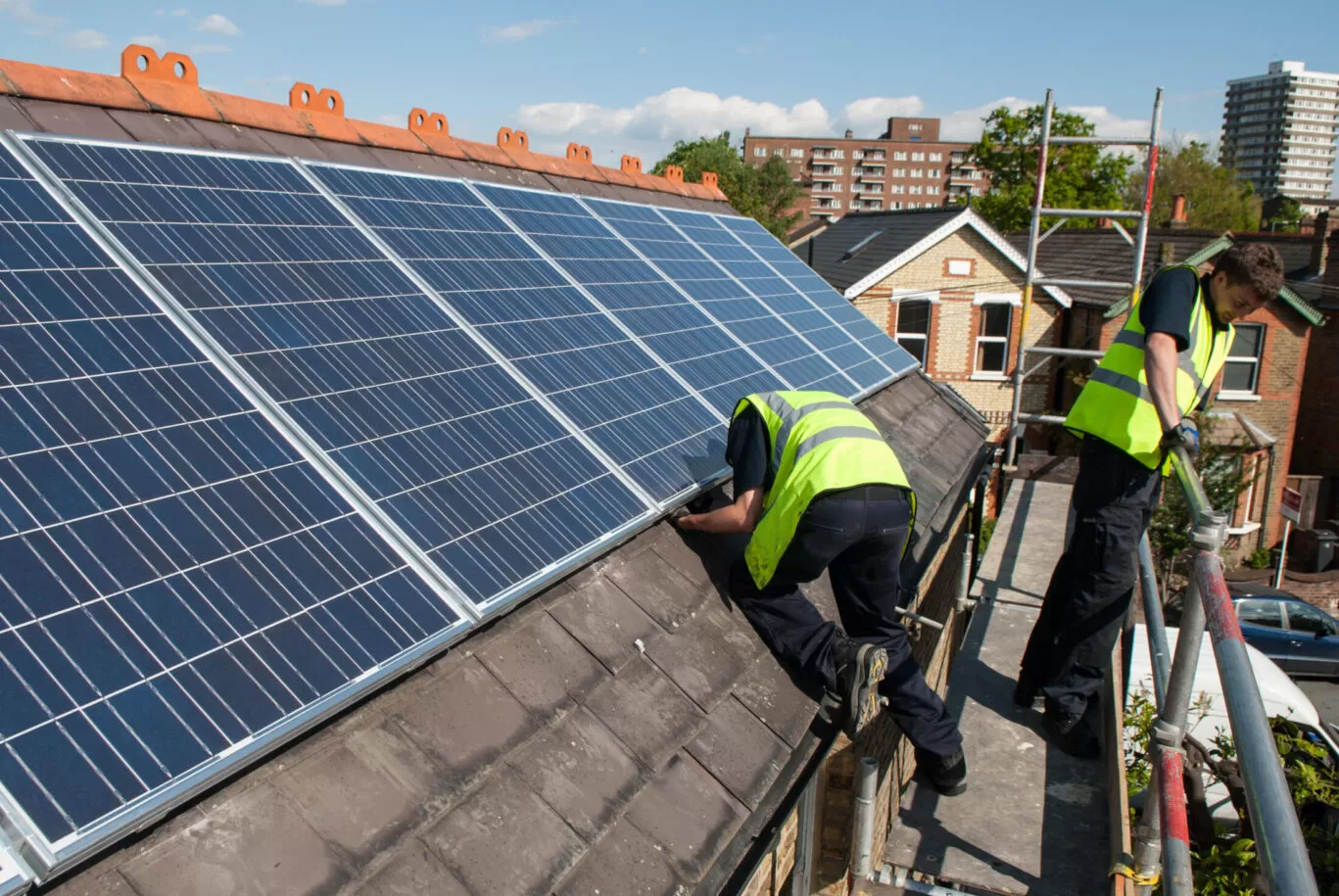
- Electricity generation from photovoltaic (PV) systems
- Energy captured by solar thermal systems
These calculations allow the model to account for both the benefits and impacts of solar energy on building performance.
Why Home Energy Model External Conditions Matter
Although external conditions may seem like background data, they are fundamental to how the Home Energy Model works.
External temperature influences heat loss and heating system performance. Wind affects infiltration and ventilation calculations. Solar radiation contributes to heat gains and renewable energy generation. Together, these factors help the model create a more realistic representation of how a dwelling performs in its actual environment.
For energy assessors, understanding the Home Energy Model External Methodology provides valuable insight into the weather data that underpins many of the model’s calculations and ultimately influences the energy performance results produced by HEM.